
Someone who loves me very much gave me this book about endangered languages. I would never have bought it myself. So much has been written about the topic, and what can be added? 90% of the world’s languages will go extinct in the next one hundred years, and if some world leaders become even crazier than they are now, the process may be accelerated. Then all languages on the planet may become extinct much earlier – including their own. Some AI specialists have predicted 2030, six years from now.

But I did read the book, and I am impressed. The prolific linguist-writer David Crystal, who himself produced another book about endangered languages, wrote the following about How to kill a language: “A love letter to languages. These ten stories locate their languages in a context of personal heritage, identity, and culture in a way that is both intellectually rigorous and yet profoundly moving.” And I totally agree. I recommend the book highly.

The author, Sophia Smith Galer, is Italian-British, and she grew up with Italian spoken by her mother, and an Italian dialect (or dialët), or perhaps a separate language, spoken by her grandmother. Some of the ‘dialects’ of Italian are more properly labelled ‘languages’, like Friulian and Sardinian. The author brilliantly weaves in her own experience with the loss of her heritage languages with the loss of the other languages discussed in the book, for which she travelled around the world. She wanted to document the disappearance of languages. She does that by describing ten different situations of language loss.
I learned a new word in the book: glottophobia, the fear of other languages. Some people want to kill them because they are afraid of them.
The author is not a linguist, but a curious and engaged journalist with a sincere interest in the topic, and a good feeling for style. Despite having had no training in the science of language, it is close to impossible to spot factual errors in the text. I do give two examples, however; (1) she calls Surzhyk a pidgin, which it is not, it is the occasional unsystematic mixing of Ukrainian and Russian in Ukraine, not a simplified languages for interethnic contacts; (2) she writes that preaspirated consonants (a puff of breath like a h before a p) are found in Oman and South America and some places in Africa, but they are also found in other parts of the world, e.g., Scotland, Canada, and Iceland. But such errors are extremely rare. Not only lay people (for whom this book is written), but also specialized and professional linguists with an interest in the topic can learn things from the book. Chapeau.
The languages in question
Ten languages are the topic of the ten chapters, and all ten chapters discuss different causes of language death. The languages are: Italian as a heritage language in Britain, the Śh̩erɛ̄t language of Oman, Ukrainian, Ladino the language of the expelled Jews from Spain and now spoken in Greece and Turkey, Karuk an indigenous language of California USA, Kurdish of Central Asia and the Middle East, Kichwa (often written Quechua) of the Andes mountains in South America, Hebrew of the Ancient Middle East, Dagbani of Ghana in Africa, and finally Dialët of Northern Italy. But many other languages are mentioned: Ubykh, Basque, Tiwi, Gaelic – some of the 7,000 or 8,000 languages still spoken on earth.

How have different nations killed these languages, or brought them close to extinction?
EMIGRATE: People who emigrate to a new country, or their children, may no longer transmit their heritage language, such as Italians in Britain. Often the third generation will be monolingual. That would be the fate of the author’s heritage language Italian.
BUILD: Śh̩erɛ̄t, a language thriving in a rather inaccessible region of Oman, is rapidly losing competent speakers since it became part of greater density of roads (and of course teaching and mass media). The language has several words for different types of cow dung, and eight words for ‘to go’, depending on the time of the day.

OCCUPY: Ukraine is again occupied by Russia. Ukraine became independent from the USSR, a Union of republics led by Russia, in 1991. The Russian language had by that time already thoroughly influenced Ukrainian, and in places also replaced it. President Zelenski, for instance, was actually a Russian speaker, like many other Ukrainians. Russian was imposed on the republics of the USSR where other languages spoken, including Ukrainian. Perhaps Russian influence was more pervasive in Ukraine because the two languages are fairly closely related, perhaps like two Scandinavian languages, or Spanish and Portuguese.
EXPEL: All Jews were expelled from Spain in 1492. These Sephardic Jews spoke a form of Spanish, which they took with them to their new homes in Greece, former Yugoslavia and Turkey – and Morocco. Incredibly, some communities maintained the language until today, more than 500 years after the expulsion. But with huge language loss: perhaps there is only one speaker left in Sarajevo, and two in Thessaloniki, and more in Turkey. There are attempts to keep the language alive. The language has disappeared from the linguistic landscapes of their communities, including the tombstones that have disappeared. There are attempts at revitalization, especially through music.

EXPLOIT. The indigenous Karuk people of California were, if not outright murdered, exploited by the Spanish- and English-speaking settlers. The Karuk language was forbidden in the schools. This chapter is the story of an idealist soul who wanted to realize her dream and revive Karuk by speaking it to her children. There are only 12 adult speakers left, and this young family also speaks Karuk at home.

By the way, there are more speakers of Navaho, an indigenous language of another state, than speakers of all Californian languages taken together in California as pointed out in Lean Hinton’s beautiful book “Flutes of Fire”. Their own Karuk indigenous toponyms have been replaced by placenames of the intruders. The exploitation led to biological, cultural and ecological disasters in addition to the extinction of a dozen or more language families.

CRIMINALIZE: Some countries have forbidden the speaking or teaching of Kurdish, still spoken by some 12 million people in the homeland covering the states of Syria, Turkey, Russia, Iraq and Iran, and by millions of Kurds living elsewhere in the world, often as refugees. Forbidding a language can cost lives: when an earthquake hit Kurdish regions, information about help was only spread in the Turkish language. The four countries oppressing the language can be called a fourfold linguicide, perhaps the most blatant in the world.

SHAME: Colonial powers have typically called the local language unfit for the modern world. For instance because they say that language lacks indigenous words for religion, dentists, books, devotion, etc.. And often the locals believe this. No doubt those languages can express such concepts, perhaps with a verb, or with a phrase, but the colonials were ignorant or malevolent. There are also many indigenous concepts which the colonial languages did not have words for.

The language Kichwa (also known as Quechua) is perhaps spoken by six million people, and probably the indigenous language with the highest number of speakers of all of the languages of the Americas. Nevertheless, many communities in Colombia, Peru, Ecuador, Bolivia, and Argentina are shifting to Spanish. Parents asked for less Quechua teaching in their schools. Speakers are ashamed of their language. All languages are equal. But not when speakers are ashamed of them.
SANCTIFY: Some languages may be so revered, that they become extinct. That was the case with Hebrew. Hebrew was the language of the God of the chosen people, and very religious people therefore ceased to speak this holy language, and shifted to Aramaic around the beginning of our time reckoning. Jesus did not speak Hebrew, but Aramaic. Even today, religious Jews prefer not to speak the revived language of Israël, Iwrit, but Yiddish. Biblical Hebrew died out because it was such an important language for religion.
IGNORE: Dagbani is one of the 80 indigenous languages of Ghana, and spoken by almost six million people. Ghana has only one official language, and that it English. The local languages suffer, not in the least Dagbani, with a similar number of speakers as Catalan or Danish.

REMEMBER: Dialët is the variety of Italian spoken by the author’s nonna, grandmother. The chapter describes the author’s quest for written sources in the language in the region where it was once widely spoken. She finds them in unexpected places.
It is a fascinating book, with gripping stories and representative case studies. Throughout the book, she does not italicize words that are not part of the English language. Let us end this with a number of sundry interesting facts, observations and quotations from the book.
HAPPINESS FOR INDIGENOUS POPULATIONS
Research in Canada showed that there were huge differences in happiness on the different First Nations reserves in the country. In those reserves where the majority could hold a conversation in the Aboriginal language (there are still around 50 indigenous languages, but all but a handful are endangered), social problems were significantly less than in communities where the language was dying or extinct. The languages apparently have a value for the community, and language loss also costs lives.
ECONOMY
According to some sources, the UK loses 48 billion pounds in business opportunities each year because of the willful monolingualism of the country.
MONUMENT
There is a monument in Kyiv, Ukraine, designed to remember the killing of a language.
FOOTBALLERS
Footballers/soccer players who speak multiple languages often go viral.
LANGUAGES ONE HAS NEVER HEARD OF
Donald Trump: Foreign languages “are coming into our country”. Illegal immigrants “have languages that nobody in this country has ever heard of. It’s a horrible thing.” (p. 20). He has probably spoken about other migrant languages, rather than his own or his ancestors’ German.
HOW MANY MUSICAL INSTRUMENTS?
Can one play multiple musical instruments, or speak multiple languages? Schools are known to teach pupils to play up to 15 instruments, but teaching 15 languages in a school, or even allowing pupils to use that many, is almost unheard of.
DIALECTS
An Italian researcher found that the press considered dialects relics of the past, and ‘unintelligible’ and ‘immutable’. But in 2025 a manifest was published in which it was said that ‘speaker communities want tools, not museums’.
WINE AND CHEESE
There are all these different wines and cheeses. Would the world be better if each country just had one type of wine and one type of cheese? Or one type of wine and one type of chees in the whole world?

DECADE FOR INDIGENOUS LANGUAGES
We are midway in the Decade for Indigenous Languages (2022-2032), with languages as intangible heritage. The prospect of survival for these languages is not very encouraging. When children do not learn the language in the home, it is the beginning of the end. Ghil’ad Zuckermann, linguist and revivalist, calls extinct languages ‘sleeping beauties’, but the chance that they are kissed to life is not huge.
AND FINALLY.
“To achieve that diversity-within-unity, this book exposed the criteria that societies all too often deprive their populations of: Tolerance of multilingualism, minority rights, state recognition, and power.“ (p. 257).
I can highly recommend the book.
Sophia Smith Galer. How to Kill a Language: Power, Resistance, and the Race to Save Our Words
London: Sophia Smith Galer. 2026. William Collins.

Peter Bakker is a linguist at Aarhus University. He has worked with speakers of several endangered languages.
 Lingua Franca: Elusive contact language of Christian slave colony based in Algiers finally pinned down
 Is the Greenlandic language extinct?
 2019 – International Year of Indigenous Languages
 ‘Microphone in the Mud’ by Laura Robinson
 Tevfik Esenç & Ubykh: cenaze – begrafenis – begravelse – funeral
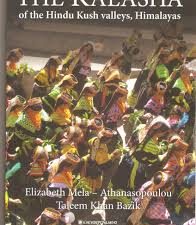 Culture and language of the Kalasha
Language extinction is not just the loss of words, but also the loss of cultural identity, history, and knowledge passed down through generations. Supporting community-led language education, encouraging children to speak their heritage languages, and recognizing minority language rights are essential steps toward preserving the world’s linguistic diversity.
Yes, Yaya, you are completely right.