
Karl Verner, world-famous linguist – a former student from Aarhus Cathedral School. Part 1

karlverner

Few people who walk into the buildings of Aarhus Cathedral School, the red and the gray, are aware that someone who once spent many hours studying here went on to being world famous. And even better that the basis of this fame was founded at the Cathedral School, in an area of study unknown to most people.

Few of the students rushing along Vestergade in Aarhus on their way to school even pay attention to the memorial plaque on the gray house number 5: “The linguist Karl Verner 7th of March 1846 – 5th of November 1896 lived here from 1851 to 1875”. Today there is a shoe store and a fur store on the ground floor, but … ↪

How does Lingua Franca induce loneliness? Thoughts upon reading Nolan’s 2020 “The Elusive Case of Lingua Franca”

340px Linguafranca

How would it be if people of all nations spoke but one language? If the world had a universal tongue so that all people, regardless of their mother tongues, their cultures, and their religions, could easily and readily communicate? And what if it took very little effort to learn this language? A code where all language borders dissolve, and the world is without misunderstanding: a true lingua franca, no less.

This dream is not a new one. As Umberto Eco for instance has eloquently shown in his book “The Search for the Perfect Language”, the romantic notion of a universal language has been around for millennia, and it was highly popular in Europe throughout Renaissance and then Enlightenment. In the … ↪

African languages in the 1700s Danish West Indies

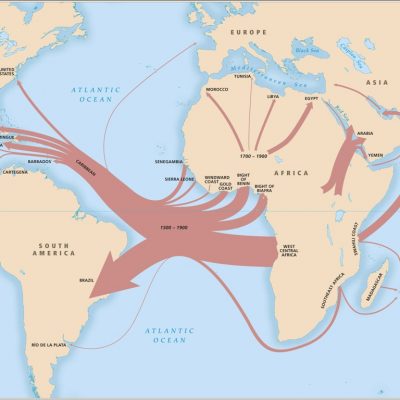
voyages slave routes

Most of the Danish West Indian population during the colonial era did not come from Denmark, but had African roots. Even though the African languages only survived as traces in the creoles of the islands, we know that they were used (recessively) in the Virgin Islands for centuries. Danish slave ships transported around 100,000 Africans to the West Indies between 1673 and 1807, and census data from the Danish National Archives (Rigsarkivet) shows that in 1841 – just seven years before the emancipation – close to 10 percent of the unfree population on Saint Croix was born in Africa.

So, which African languages were spoken in the former Danish West Indies?

Since there are somewhere between 1,500 and … ↪