A curious case of language death: How one man killed off Amager Dutch

Screenshot 2025 09 04 at 16.15.43

For a Danish translation of this article, click here. Updated Oct. 14.      

As Lingoblog celebrates UN German Language Day, Joost Robbe examines the unique history of Amager Dutch (a Dutch-Low German dialect), used on the Danish island of Amager, near Copenhagen, between the early sixteenth to the mid-nineteenth century. He explains how, having survived for centuries, the fate of this minority language rested on the choices — and linguistic inadequacies — of a single person.

How often can the death of a language be traced back to a single person? Almost never. But the case of Amager Dutch – once spoken in Store Magleby outside Copenhagen – is different. For centuries, the community combined Dutch speech with a strong Low …

Berbice Dutch: a language in South America

Guyana orthographic projection.svg

Known to its speakers as di lanshi (= the language), Berbice Dutch was declared extinct, after the death of its last fluent speakers, Albertha Bell and Arnold King, in the early 2000s. Auntie Bertha and Uncle Arnold – as I knew them, using the usual terms of address for one’s respected elders in Guyana – were cousins who grew up together after King’s parents died in the flu pandemic of 1918 which reached even the remote tributaries of the Berbice River in Guyana, in South America; having survived that deadly flu as children, they both lived long lives, into their 90s.

Berbice Dutch: language of the Berbice colony

Like other creole languages in the Caribbean region, Berbice Dutch was once …

Expedition into the savannah and jungle to look for a lost language

20240813 084923

(Spanish version, translated by Jonathan Mastai Husum, can be found here)

Our islands bear twisting names in fading tongues

Whose meanings now escaped our young

                  Basil Rodrigues, Spanish Arawak from Guyana, in his poem Santa Rosa

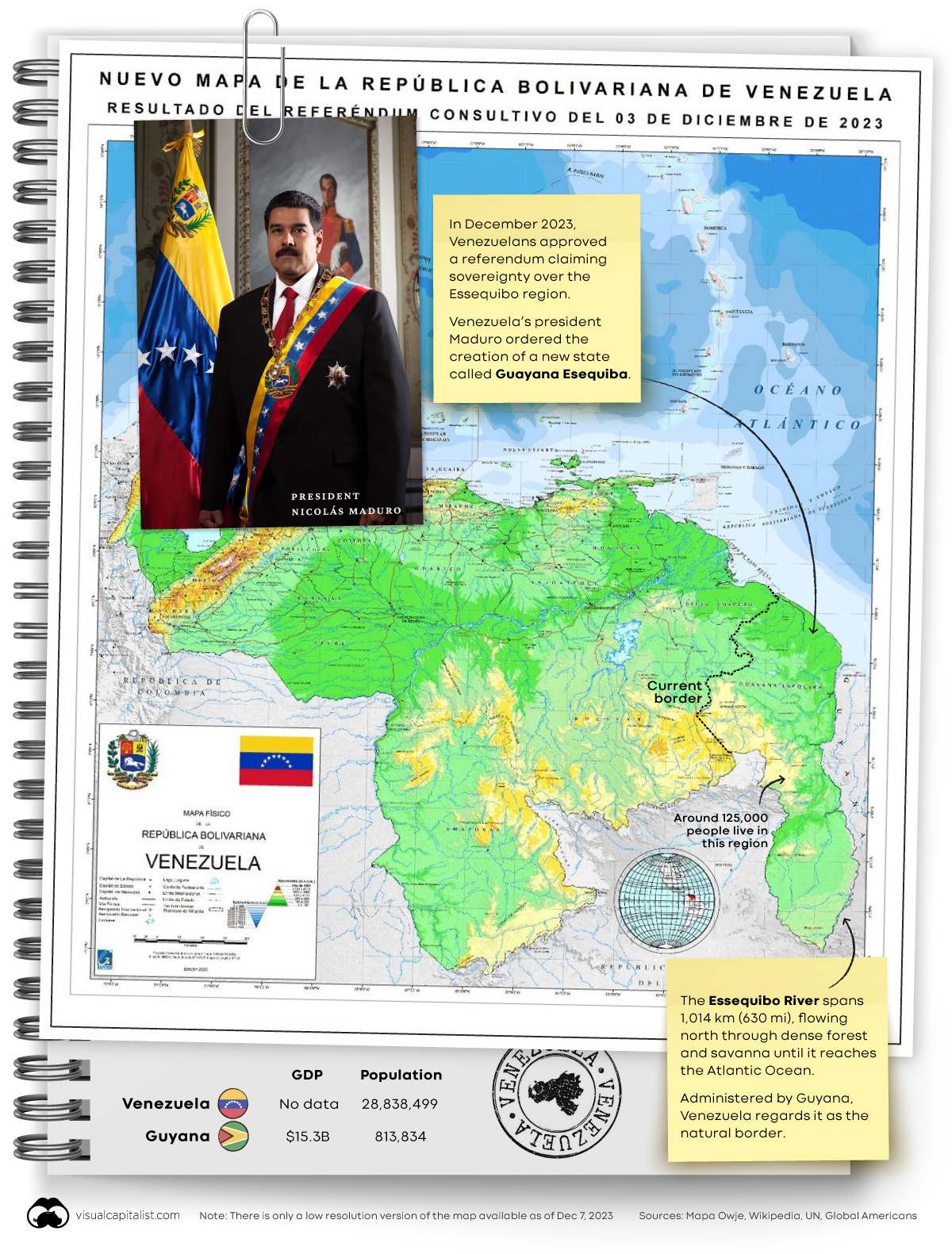
Around a year ago, I published this article on Lingoblog on whether linguists can prevent a war. I had written it after the Venezuelan supreme leader and his government had claimed two thirds of their neighboring country Guyana. The dictator’s parliament also supported the land claim, and now that area is listed as “contested” in several places. Sad, because the Spanish and the Venezuelans never really had shown any presence in that part of the world.

The land claim, and the …

NOW THAT’S WHAT I CALL LINGUISTIC CHRISTMAS

now thats what i call linguistic christmas

It’s Christmas-time again – and what would this time of year be without Christmas music? A lot of us start counting the days ’till Christmas from the moment “Last Christmas” surprises us in a shopping center sometime around November 20th – and let’s just admit it: We can’t get enough of Christmas songs!

Or maybe Christmas music just isn’t your thing. Is it really possible to listen to ”All I Want for Christmas is You” throughout December without losing your mind, you might be thinking. I mean, I’d say it is, but… I get it. You need something new – something different! I’ve dug around on the internet and asked Twitter for help, and now I’m happy to present …

Can we linguists prevent a war? How can linguistic research establish whether Venezuela could have some kind of right to claim parts of Guyana?

venezuela guyana referendum map 1

Venezuela wants a large part of its neighboring country Guyana. Venezuela and Guyana have sent troops to the borders. In addition, Brazil and the USA are mobilized in the region. Will Venezuela invade Guyana? Venezuela has already spread official maps where the Essequibo region is part of Venezuela, and they distribute Venezuelan IDs to people in that part of Guyana. Will Venezuela, with 350,000 troops, invade Guyana, with 8,000 troops?

The part of the world called Essequibo has been a matter of conflict since the early 1800s, when the British took over the Dutch colonies in the region. In 1814 the British established officially what was then called British Guyana, by incorporating the Dutch colonies settled from the early …

The role of extinct languages in the Venezuela-Guyana conflict

Essequiborivermap

We could hear it in the news. Venezuela claims a part of its neighboring country Guyana because it wants to have the oil. Greed. Power. imperialism. The population agrees with the president’s and government’s idea that a piece of Guyana actually belong to them. Hopefully this will not lead to an invasion, a special military operation or a war, or whatever such actions are called these days.

It is not well known that there was a dispute about the border before. A committee that worked on the border dispute came with its judgement in 1899, largely in favor of Britain (at that time it was British Guyana, the country is independent since 1966). The international commission was installed to study …

The life and death of Mrs. Alice Stevens (1899–1987) and her native language (ca. 1700–1987)

Sabino Stevens 1

This day in 1987, 36 years ago, the last speaker of Virgin Islands Dutch Creole – Mrs. Alice Stevens – passed away. And with her the language. This post is about the life and death of Alice Stevens and her native language, Dutch Creole.

Dutch Creole was spoken on the three Caribbean Virgin Islands of St. Thomas, St. John, and St. Croix for nearly three centuries. It existed from around 1700 until 1987, when its last speaker passed away. Alice Stevens was born in 1899 on the island of St. John. Dutch Creole likely originated on St. Thomas around 1700. Thus, she was born when the language was already approaching 200 years of age – a significant span in the …