Book review: Before the Linguistics Wars, was there peace? An edition of the correspondence between Hugo Schuchardt (linguist) and Gaston Paris (philologist)

Maanen i min kuffert

Perhaps, dear reader, you are at a linguistics department, while your friend – studying very similar courses at a different university – is in a philology department. Some departments used to call themselves one way but later renamed themselves, such as Harvard’s Department of Linguistics, originally Comparative Philology. What differences are there and why does the name seem to matter? A highly readable and enjoyable article containing both qualitative and quantitative data tackled this issue over three decades ago – Margaret Winters & Geoffrey Nathan’s 1992 “First he called her a philologist and then she insulted him” (a worthwhile longer account can be found in Momma 2012).

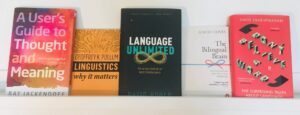
And a likewise highly readable and enjoyable book has existed since …

Creativity as an approach: the frame(works) of egos in academia & beyond – Some Islands 3 video review

Frames7 scaled

Míša Hejná has reviewed Some Islands 3, and as she stated in her review of Some Islands 1: “This is not your typical linguistics / language studies journal, and so this is not going to be a typical review.” The same can be said for issue 3, which has resulted in this impressive video review.

You can read Lingoblog’s reviews of the previous issues here: Some Islands 1   Some Islands 2.

Cover illustration: Collage by Míša Hejná, with excerpts from or inspired by Some Islands 3.


Míša Hejná is an Associate Professor in the English Language at the Department of English at Aarhus University, Denmark. She is the founder and the current coordinator of the Centre

To buy a pig in a poke – a Danish-German language collaboration on fixed expressions

ko paa isen e1758012010884

Have you ever “bought a pig in a poke”?
If you speak Danish (at købe katten i sækken) or German (die Katze im Sack kaufen), you might already know this phrase. If not, you are about to discover why idioms and fixed expressions are so fascinating – and why they matter for communication across languages.

Share your favorite expressions with the project here.

The project

Knowing and being able to use each other’s language is one of the most important prerequisites for a well-functioning community. For the Danish-German border region, this applies in particular, since knowledge and command of the neighbor’s language cannot be taken for granted. German faces difficult conditions in Denmark, while Danish as …

Prepare for: LingoSlam 2025!!!!!

Screenshot 2025 04 22 at 09.53.14

LingoSlam is the biggest event of the year. ViGør bands together to plan a fun afternoon of features by students and teachers alike at Aarhus University. Anyone can participate and show off their expertise in any arbitrary area. Participants will compete to win in five different categories: humoristic, creative/artistic, poetic, academic, and humdinger/best of all. Participants get 8 minutes to do whatever their heart pleases to compete for unique diplomas as proof of excellence.

So what can you expect from this exceptional afternoon? What magnificent sights will be presented? What words will be uttered? This is a secret for now, but one thing we can confirm is that our three judges of Lingoslam 2025 will be Rebekah Baglini, Maria Jørgensen, …

Questions or answers in a book with a questionable title?

Skaermbillede 2025 01 29 kl. 15.24.01

Who is Paul Anthony Jones, the author of the book under review? Is he related to John Paul Jones, the keyboard player in Led Zeppelin? Or was it bass? Why does this book have a question on the cover and not a statement, as all ‘normal’ books? Is it the only question discussed in the book, or are there also other ones that are discussed? If so, does the author provide answers to those questions?

Why didn’t the author finish his university studies in linguistics, to the dismay of his teachers? Why did he then become a freelance writer, who writes about languages? Is it true what he writes about this, that he does not regret the choice, and that …

NOW THAT’S WHAT I CALL LINGUISTIC CHRISTMAS

now thats what i call linguistic christmas

It’s Christmas-time again – and what would this time of year be without Christmas music? A lot of us start counting the days ’till Christmas from the moment “Last Christmas” surprises us in a shopping center sometime around November 20th – and let’s just admit it: We can’t get enough of Christmas songs!

Or maybe Christmas music just isn’t your thing. Is it really possible to listen to ”All I Want for Christmas is You” throughout December without losing your mind, you might be thinking. I mean, I’d say it is, but… I get it. You need something new – something different! I’ve dug around on the internet and asked Twitter for help, and now I’m happy to present …

Lingoblog, true crime and the identification of the victim after more than 30 years

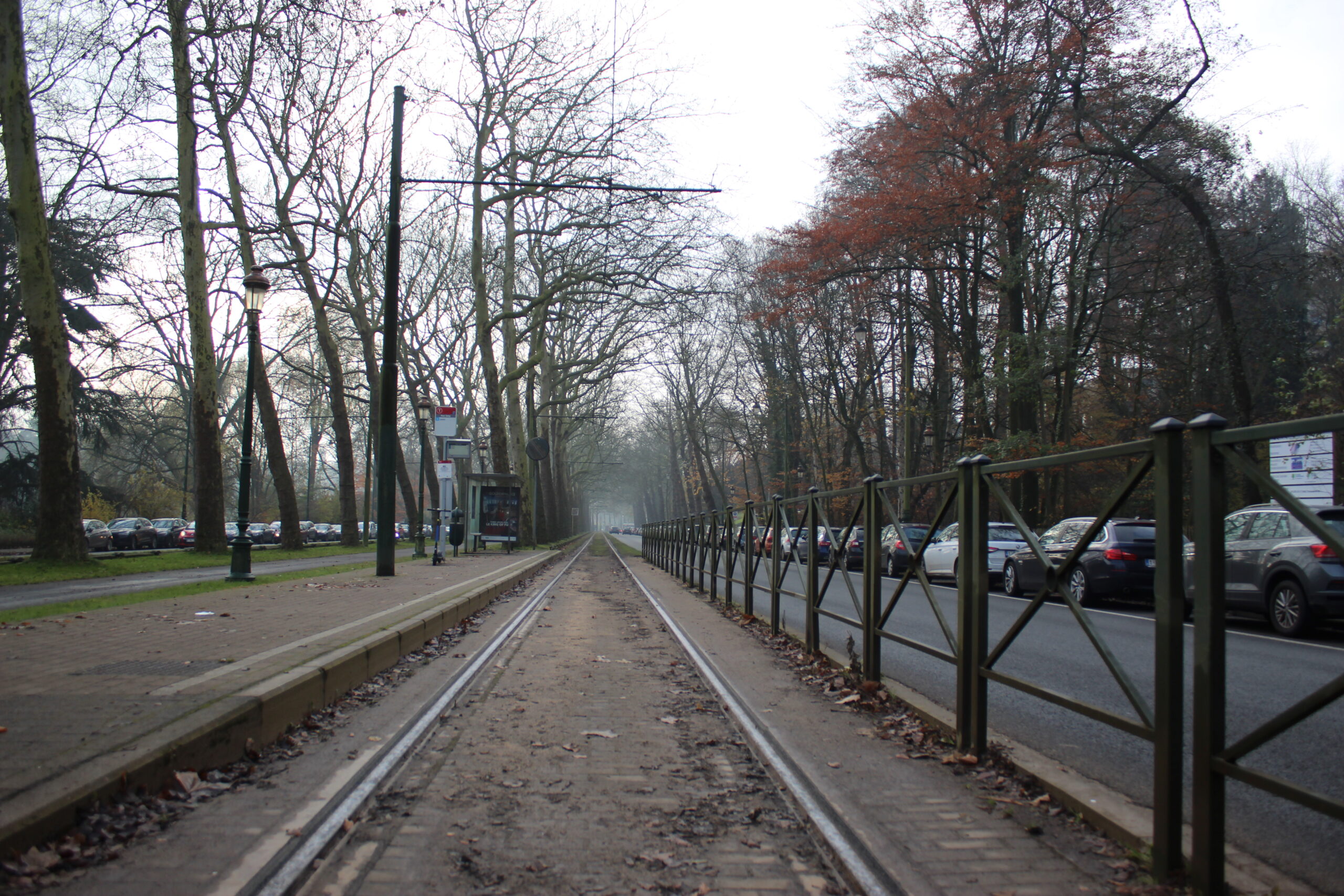
Linea de tranvia en Watermael Boitsfort public domain scaled

(trigger warning: violent content)

Last year, November/December 2022, Lingoblog brought a quiz about a true crime. We had received a mail with the request to help to solve a crime that had been committed in 1992. The crime had not been resolved, but finally the identity of the victim has been identified, thanks to the tattoo with a text that we showed. The tattoo is not reproduced here. It can be seen in the article linked to below.

This was the story in the quiz:

In 1999 [sic] the body of a woman was found in Antwerp, Belgium (…) She had a tattoo on her body. But what does it say on the tattoo? Many people have looked at it,