How Instagram Makes Fukushima Feel – Without Really Saying It

Screenshot 2026 09 01 at 20.18.59

Everybody remembers the imagery of the Fukushima Daiichi nuclear disaster of 2011: the tsunami, the wrecked plant, the victims, politicians discussing the aftermath. In 2023, Fukushima was back in the news: Japan began the gradual discharge of treated plant water from the Fukushima Daiichi nuclear power plant into the Pacific Ocean. Instagram quickly became a space where private users as well as institutions shared concerns, reactions, interpretations and feelings about this decision. The topic was and still is emotionally and politically charged.

But when I started scrolling through these posts, I noticed something interesting: I expected strong emotional language. But people mostly don’t say “I am furious” or “this makes me anxious”. And still, I could feel the emotions on

”I read your Facebook post and (I think) I know who you are”, part 2: A mini-experiment on author psychology assessment

minieksp

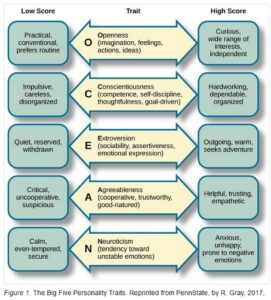
In part 1 on this blog, “A mini-history of author analysis”, I pointed out that attempting to draw conclusions about the author of a text based on traits of the text alone has a long tradition in forensics (identifying perpetrators or revealing forgeries), literary studies (authorship identification) and psychology (from psychoanalysis to modern customer/consumer behavior studies). In its modern, machine learning version, psychological author profiling is often based on the ”Big Five” model (see figure 1) going back to McCrae & Costa 1989.
Billede2

But how do human readers decode and interpret concrete features of text as to its authors personality?

In order to find preliminary answers to this question, I performed a mini-experiment in my lesson on “Communicative …

”I read your Facebook post and (I think) I know who you are”, part 1: A mini-history of author analysis

Billede1

Attempting to draw conclusions about the author of a text based on traits of the text alone has a long tradition. It has been a topic of interest in forensics (identifying perpetrators or revealing forgeries), literary studies (authorship identification) and psychology (from psychoanalysis to modern customer/consumer behavior studies). In 15th Century Italy, Lorenzo Valla proved the forgery of the Donation of Constantine based on anachronistic word choice (8th, and not 4th, century A.D.) and poor grammar. Contending the authorship of certain texts previously attributed to Shakespeare goes back to the end of the 17th Century and builds on the philological methods stemming from biblical and classic studies, developed in the Renaissance period, analyzing language style (word choice and grammar). In …