Anyone who thinks that Afrikaans is a monolithic language is quite mistaken. Afrikaans has various dialects, which are traditionally divided into three main groups: Eastern Border Afrikaans, Orange River Afrikaans and Cape Afrikaans. This diversity is not merely a linguistic matter, but also reflects South Africa’s turbulent history.
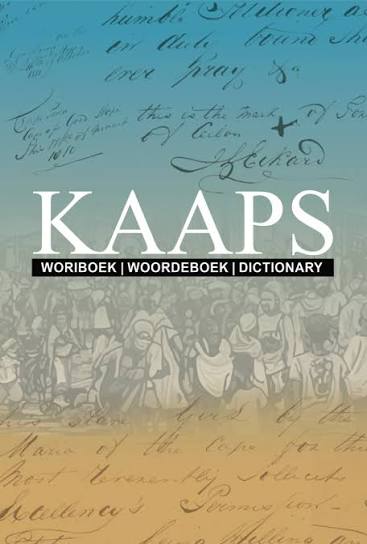
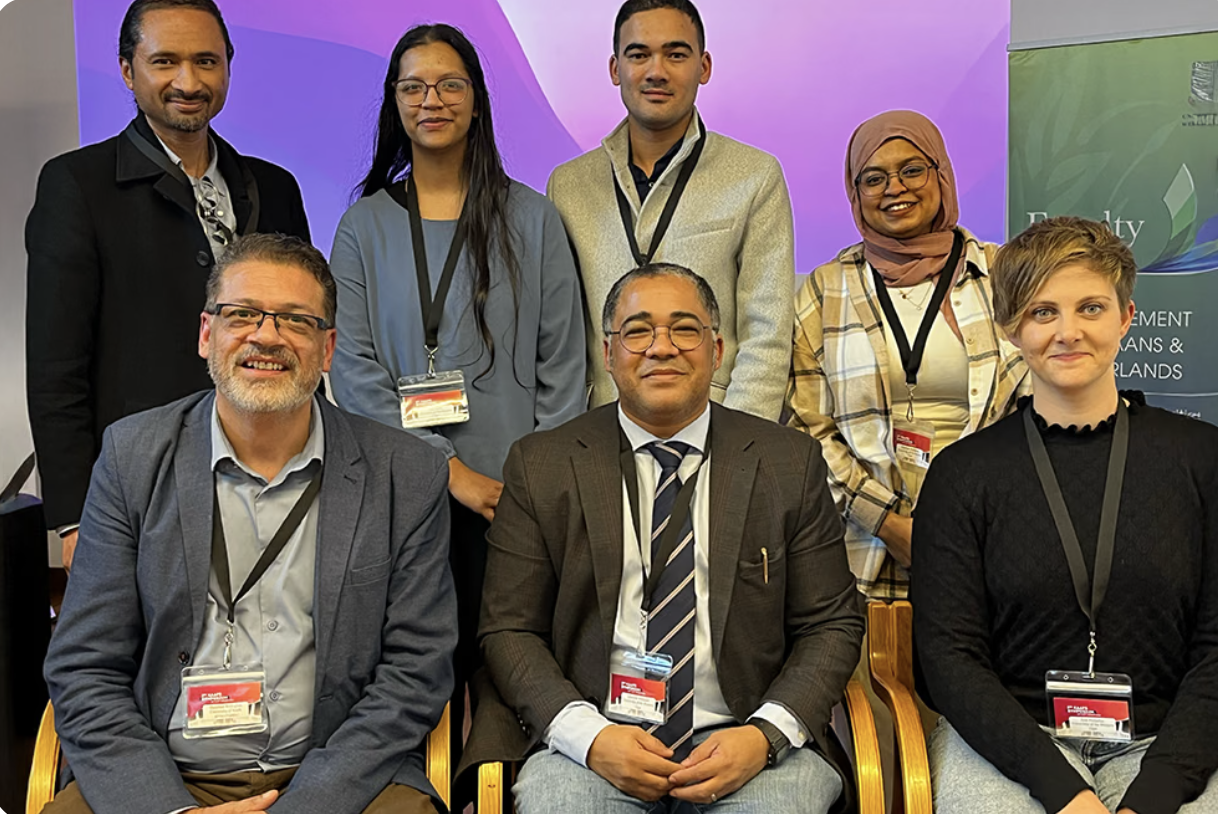
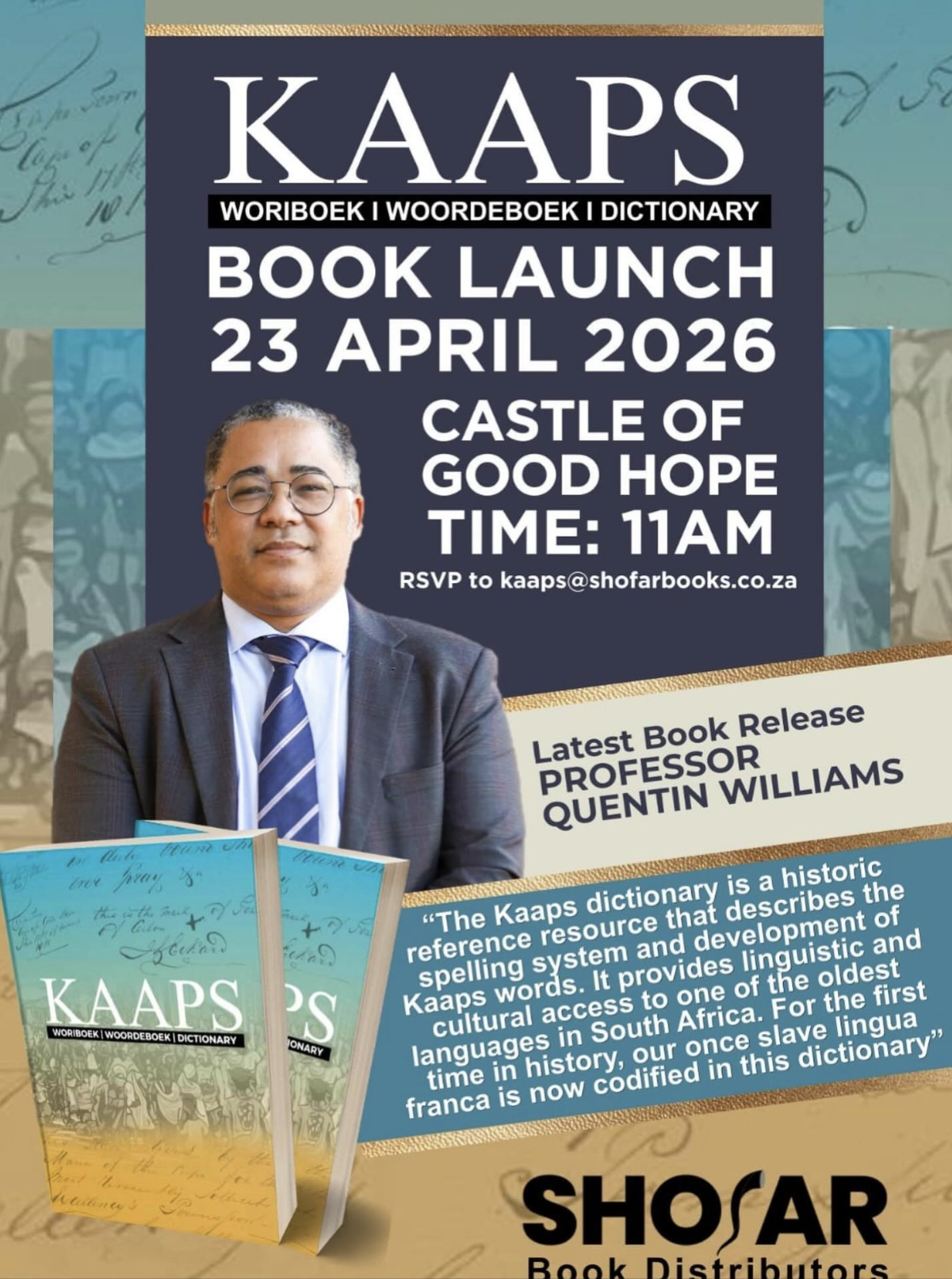
The dictionary was compiled by a research team led by Quentin Williams, Professor of Sociolinguistics at the University of the Western Cape, including Theodore Rodrigues and Chevãn Van Rooi, amongst others. It is, in fact, a fully trilingual publication: not only are the Kaaps headwords defined in Kaaps, Standard Afrikaans and English, but the historical introduction and the user guide are also included in all three languages. In this way, Kaaps is given a place not only as the subject of description, but also as the language of scholarly explanation. Furthermore, the compilers have developed their own spelling system for Kaaps, which is applied throughout the dictionary.
The result is an interesting and informative book of around 300 pages in a handy format. The historical introduction offers a fascinating overview of the origins of Cape Creole. For example, we read how the Khoisan were deterred from learning Portuguese due to their bad experiences with Portuguese seafarers, whilst Portuguese Creole eventually found its way to the Cape via enslaved people. This is followed by a concise linguistic description of Cape Creole, which reviews the language’s most striking features; the subsequent guide (‘how to use this dictionary’) also contains a brief section on grammar, although it is not entirely clear why this has been included there. The grammatical descriptions are, incidentally, rather selective. Anyone expecting a comprehensive, systematic grammar of Kaaps will not find it in this booklet. That is not necessarily a drawback, but rather a matter of expectations: after all, this is a dictionary, not a grammar book.
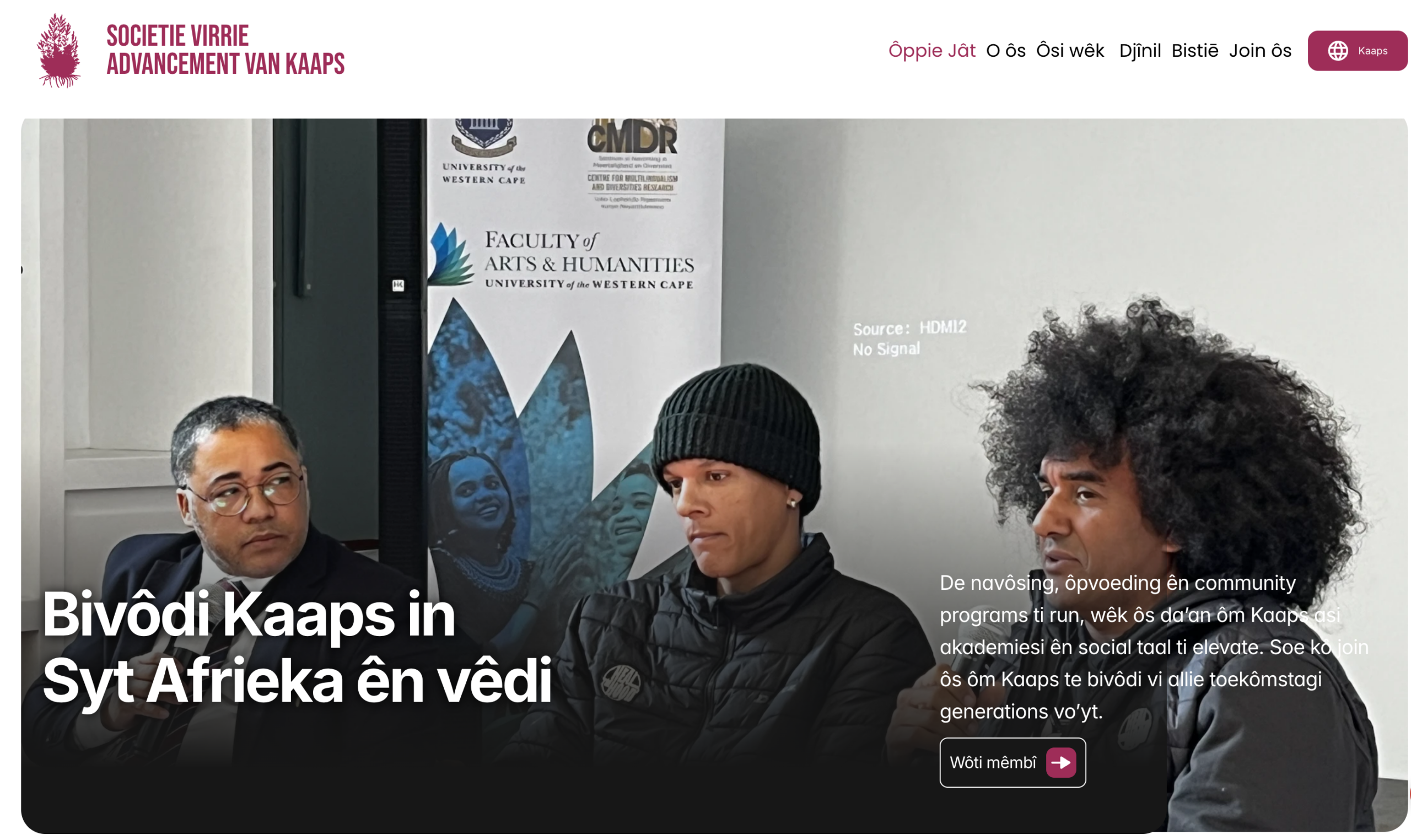
On the other hand, the book contains a wealth of interesting phonological observations. One striking example is the elision of the /r/, which is often accompanied by changes to the preceding vowel: Standard Afrikaans werk and kerk correspond to Kaaps wêk and kêk. However, woordeboek is rendered as woriboek, retaining the /r/. Other consonants may also disappear, as in kom → kô and ons → ôs.
Other interesting sound changes include the simplification of certain diphthongs and the use of full vowels (particularly /i/) where Standard Afrikaans has a schwa, although this latter phenomenon is not explicitly discussed.
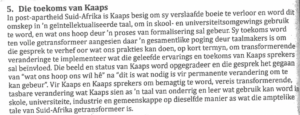
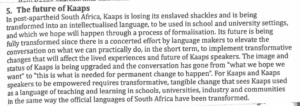
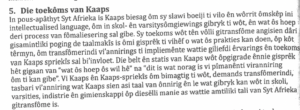
Text fragment from the book in three languages: Afrikaans, English, Kaaps.
Unfortunately, it is not always clear how the spelling used relates to the pronunciation. For example, what exactly the circumflex denotes seems to vary from word to word, although <ô> in kô and ôs presumably indicates a nasalised vowel. IPA transcriptions, including those for individual entries, would therefore have been a welcome addition.
Despite these caveats, the dictionary makes a valuable contribution to our knowledge of Kaaps. It brings together a great deal of interesting linguistic material and demonstrates how Kaaps differs from Standard Afrikaans in various respects. Moreover, it offers an excellent starting point for further research into the history and development of this language variety. But perhaps the greatest merit of this dictionary lies elsewhere: the recognition of a language variety that was marginalised for a long time. It demonstrates that South Africa’s linguistic diversity does not end at the boundaries between the officially recognised languages, but can also be celebrated within Afrikaans itself.
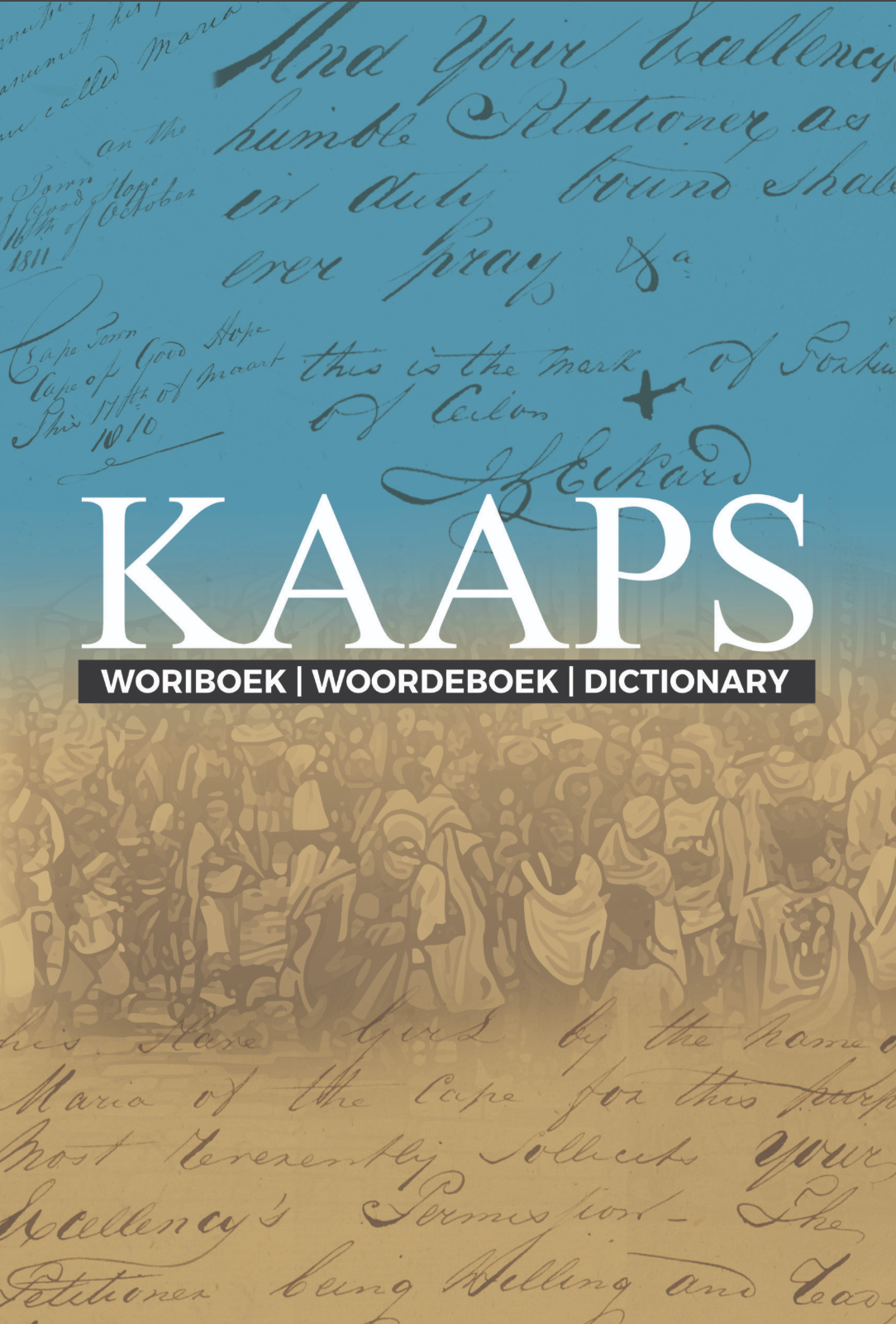
Kaaps Woriboek/Woordeboek/Dictionary.
Compiled by Quentin Williams and 14 others.
ISBN 978-1-0370-4946-0
March 2026. 320 pages, paperback.
Prijs: 300 Rand, ca. EUR 16.
Joost Robbe is a linguistics researcher at the University of Aarhus (Denmark). His research focuses on historical sociolinguistics, language contact and language change, with a particular focus on Dutch and related language varieties. Among other things, he studies the history and development of Dutch-based creole languages.
 Language in your hands: The guide to creating your very own language
 Lingua Franca: Elusive contact language of Christian slave colony based in Algiers finally pinned down
 Some Bridges
 Shaetlan: a young language with old roots – a Nordic language now officially recognized
 Making fun of the English language
 Free Ukrainian! Special linguistic operation for the Ukraine: Free Ukranian-Danish-Ukrainian dictionary for displaced Ukrainians and their helpers.
Text fragment from the book in three languages: English, Afrikaans, Kaaps.
Should read:
“… Afrikaans, English, Kaaps”
Thanks, George. We corrected it. Long time no see!